
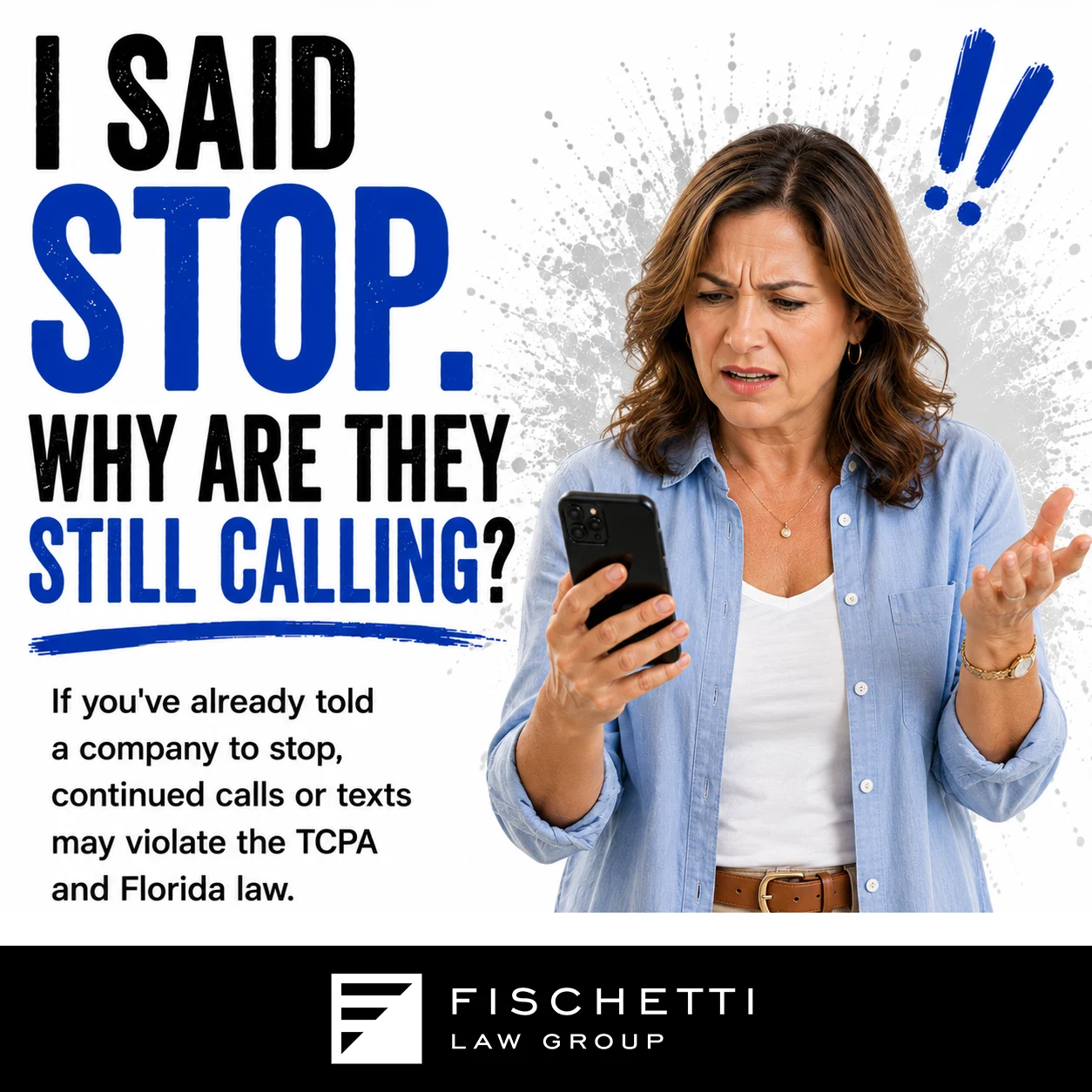
I Said STOP. Why Are They Still Calling?
You Told Them to Stop. The Calls and Texts Kept Coming.
If you’ve clearly asked a company to stop contacting you but the calls or marketing texts continue, don’t delete what happens next. The communications that come after your request may be important.
Still getting calls after telling them to stop? You blocked the number. Maybe you even replied “STOP” to their text message. So why do the calls and texts keep coming?
Every day, consumers throughout Florida continue receiving spam calls, robocalls, telemarketing calls, and unwanted marketing text messages even after asking a company to stop contacting them. Keeping records of calls after telling them to stop can help document what happened.
Depending on the circumstances, continued solicitation calls or texts after permission has been withdrawn may implicate the Telephone Consumer Protection Act (TCPA) or other consumer protection laws. Learn more about Florida TCPA protections for unwanted calls and texts.
At Fischetti Law Group, we help consumers throughout Florida understand whether repeated spam calls, robocalls, telemarketing calls, or marketing text messages may have crossed the line — and what legal options may be available.
If STOP didn’t stop the calls, save what happens next.
Why Do Calls Continue After Telling Them to Stop?
In many situations, it should.
If you’ve clearly told a company you no longer want to receive marketing calls or text messages — or you’ve replied STOP to a promotional text — you’ve taken an important step.
Unfortunately, contact may sometimes continue for several reasons.
Calling From Different Numbers
Blocking one phone number may not stop calls placed from another number.
Using Multiple Texting Platforms
Marketing messages may be sent through more than one platform or service.
Hiring Third-Party Marketers
A company may use outside marketing vendors or lead generation companies to contact consumers.
Continuing After a Stop Request
Some companies may continue calling or texting after a consumer has asked them to stop.
If that happens, don’t ignore it. Start documenting every unwanted call or text that comes afterward.
What Is Revoking Consent?
When you give a company permission to contact you, you may also have the ability to withdraw that permission.
Every situation is different, but it’s important to keep records showing when and how you made your request and what communications arrived afterward.
What Should I Do If They Keep Calling?
If the unwanted calls or texts continue after your request, start preserving the pattern.
Save Screenshots
Capture the available information for each call or text.
- The phone number
- The date
- The time
- The text message, if applicable
Save Voicemails
Don’t immediately delete prerecorded or marketing voicemails. They may contain information identifying the caller or the company behind the communication.
Keep a Call Log
Record each call or text, whether you answered, the company if known, and whether you previously asked the company to stop.
Patterns matter.
Don’t Delete the Evidence
Many consumers block numbers and immediately delete everything. Preserve what you can first, especially your stop request and communications received afterward.
Can Continued Calls Lead to Compensation?
Depending on the circumstances, eligible consumers may be able to recover compensation for certain unlawful calls or texts.
For certain qualifying unlawful calls or texts.
For certain knowing or willful violations.
Not every unwanted call or text qualifies. Whether compensation may be available depends on the specific facts, the applicable law, and the outcome of the case. No result or amount of recovery is guaranteed.
Do You Qualify?
You may want Fischetti Law Group to review what happened if:
- You told a company to stop calling or texting you.
- You replied STOP to marketing text messages.
- The calls or texts continued afterward.
- You’re receiving repeated robocalls or solicitation texts.
- You’re being contacted from different phone numbers after asking the company to stop.
Not every unwanted communication violates the law, but continued solicitation after you’ve withdrawn permission may deserve a closer look.
Frequently Asked Questions
I replied STOP. Why am I still getting text messages?
Marketing communications may sometimes be sent through multiple platforms or different phone numbers. If you’re still receiving marketing texts after replying STOP, save your STOP message and document each communication that arrives afterward.
Do I have to tell the company to stop before I have rights?
Not necessarily. Whether you have legal rights depends on the specific facts of your situation and the laws that apply. However, asking a company to stop and preserving proof of that request may become important when evaluating later communications.
Should I keep proof that I told them to stop?
Yes. Save screenshots of text messages, emails, or other communications showing when you requested that the company stop contacting you. Also preserve records of calls or texts you receive afterward.
What if they start calling from a different number?
Continue documenting the communications. Save each displayed number, the date and time, any voicemail or text, and information that may identify the company behind the contact.
Does replying STOP automatically mean I have a case?
No. A STOP request by itself does not establish that a law was violated. Whether later communications may give rise to a claim depends on the type of communication, the sender, consent, the timing and method of the request, and other facts.
Told Them to Stop. Still Getting Calls or Texts?
Don’t delete what happened after your stop request.
Tell Fischetti Law Group what happened and upload whatever evidence you have. Our team can review the communications, your stop request, and the surrounding circumstances and help determine whether you may have legal options. You can also request a free consumer case review.