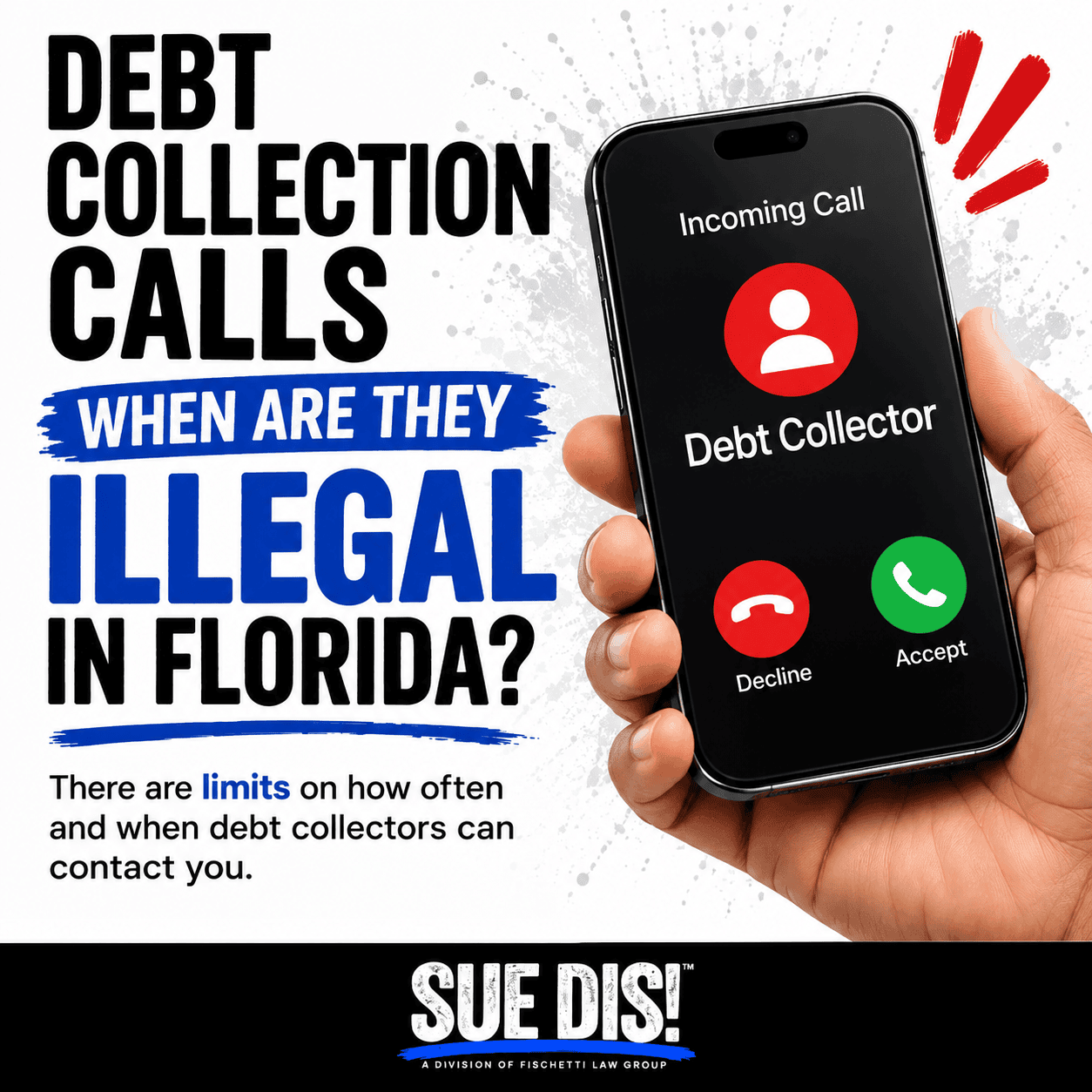
Debt Collection Calls: When Are They Illegal in Florida?
Too Many Calls? Know When Debt Collectors Cross the Line.
Repeated calls about an unpaid debt can be stressful. Federal and Florida laws limit certain debt collection practices, including excessive calling, harassment, and calls at prohibited times.
Are debt collectors calling you too often? You may have legal protections even if you actually owe the debt.
The federal Fair Debt Collection Practices Act (FDCPA) regulates many third-party debt collectors. Florida’s Florida Consumer Collection Practices Act (FCCPA) also restricts certain collection conduct, including conduct by some original creditors.
Not every frustrating call is illegal. But how often a collector calls, when they call, and what they say can make a difference. Learn more about Florida debt collection harassment protections.
You do not lose your consumer rights just because you owe money. Keep records of the calls so an attorney can evaluate the pattern and circumstances.
How Many Times Can a Debt Collector Call?
Under federal rules, these situations may indicate unlawful debt collection conduct:
- More than 7 calls within 7 consecutive days about a particular debt.
- A call within 7 days after a telephone conversation with you about that particular debt.
- Repeated calls intended to annoy, abuse, or harass you, even below those numerical thresholds.
- Calls before 8 a.m. or after 9 p.m. in your local time zone without an applicable exception.
Important: The federal seven-call standards create rebuttable presumptions, not automatic findings of liability. They are generally measured separately for each particular debt; some calls are excluded and exceptions apply. Fewer calls can still be unlawful depending on the circumstances.
What Counts as Debt Collection Harassment?
The number of calls is only part of the picture. Other conduct may violate federal or Florida law, including:
- Repeated calls made to intimidate or pressure you.
- Threatening, obscene, or abusive language.
- Calls to your workplace when the collector knows your employer prohibits them.
- Calls at times the collector knows are inconvenient for you.
- Continuing prohibited communications after receiving a legally effective written stop-contact request.
A written request to stop communication does not erase the debt or prevent every lawful collection action. Certain notices and legal proceedings may still be permitted.
Can You Sue for Illegal Debt Collection Calls?
Potentially. If a covered debt collector violates the FDCPA, an eligible consumer may be able to seek damages and other relief. Florida law may provide additional remedies in qualifying cases.
In additional statutory damages in an individual FDCPA action, subject to the law and the court’s determination.
Compensation for proven harm caused by qualifying violations, where available.
The FDCPA’s $1,000 additional-damages cap for an individual action is not a payment for each call. Remedies under the FCCPA are governed by separate provisions. Recovery depends on the facts, applicable law, and outcome; no result is guaranteed.
What Should You Do If Debt Collectors Keep Calling?
Save the evidence before deleting messages or clearing your call history.
Save Call Logs
Take screenshots showing phone numbers, dates, times, and repeated calls.
Keep Messages
Preserve voicemails, texts, letters, and any collection notices.
Document Conversations
Write down the collector’s name, company, what was said, and any requests you made.
Request a Review
Submit the records you have for a free case review to discuss possible legal options.
Frequently Asked Questions
Is it illegal for a debt collector to call more than seven times?
Federal rules generally presume a violation when a covered debt collector places more than seven calls within seven consecutive days about a particular debt, subject to exclusions and exceptions. The presumption can be rebutted, so the number alone does not automatically decide a case.
Can a debt collector call after talking to me?
Federal rules generally presume a violation when a covered collector calls within seven days after a telephone conversation about a particular debt, subject to exceptions and exclusions.
Can debt collectors call at night?
Generally, covered collectors cannot call before 8 a.m. or after 9 p.m. in your local time zone unless an applicable exception applies. Florida law also restricts certain collection communications during these hours.
Can I stop debt collectors from calling me?
For collectors covered by the FDCPA, a valid written cease-communication request generally limits further communications, with certain exceptions. It does not cancel the debt or prevent lawful legal action.
What evidence should I save?
Save screenshots of call logs, voicemails, texts, letters, dates and times, the collector’s name, and proof of any written requests. These records can help an attorney assess whether the conduct may violate the law.
Debt Collectors Won’t Stop Calling?
Save It. Track It. Fight Back. Sue Dis!
Sue Dis, the Consumer Law Division of Fischetti Law Group, helps Florida consumers evaluate potentially unlawful debt collection calls. Save your records and send us what you have.
Attorney advertising. General information only, not legal advice. Results depend on the facts of each case.